Start Your Project
Have a project in mind?
Schedule an introductory consultation to discuss your vision, timeline, and project requirements.
Explore how to design a luxury vacation home in Florida around climate, lifestyle, landscape, and effortless indoor-outdoor living. From Miami and Palm Beach to Naples, Sarasota, Orlando, the Florida Keys, and the Panhandle, discover how thoughtful design can create a refined retreat that feels uniquely connected to its location.
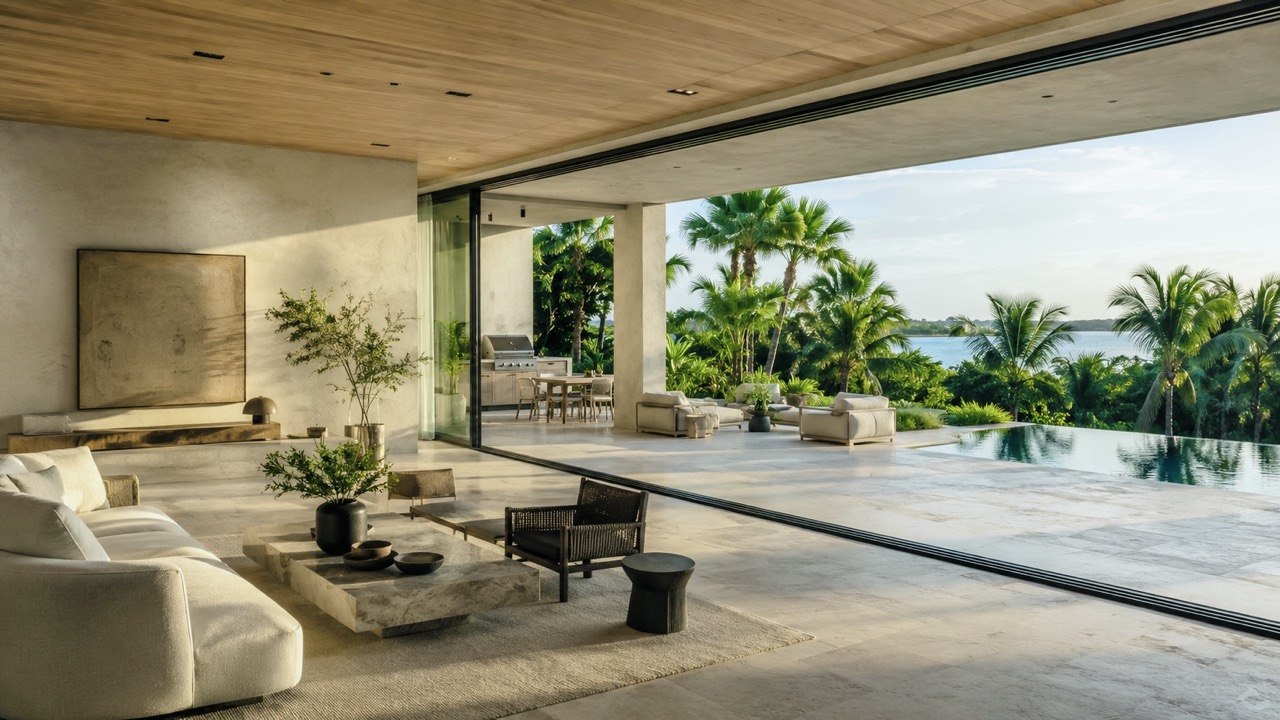
A luxury vacation home in Florida can mean very different things depending on where it is located.
A waterfront residence in Miami Beach has a different rhythm from a family retreat in Orlando. A Palm Beach estate calls for a different design approach than a contemporary villa in Naples, while a Sarasota property may be shaped by its relationship with the Gulf rather than the Atlantic.
Florida is not one design market. It is a collection of distinct environments, lifestyles and architectural traditions.
That is why designing a vacation home here should begin with more than a Pinterest board or a preferred interior style. The location, climate, landscape, family routines and frequency of use all need to be considered from the start.
For a luxury residence, the goal is not to make the house look expensive. It is to make the entire experience feel effortless.
Florida's climate makes material selection especially important. Strong sunlight, humidity, heavy rain and coastal exposure can quickly reveal the difference between a material that simply looks beautiful and one that is genuinely appropriate for the location.
But the material palette also needs to respond to the character of the property,
- In Miami and Miami Beach, contemporary residences often benefit from clean stone surfaces, architectural glass, warm wood and subtle metallic details. The design can remain sophisticated without competing with the energy of the city or the views of Biscayne Bay and the Atlantic.
- In Palm Beach, the approach can be more layered. Natural stone, refined woodwork, plaster, linen and carefully selected decorative details can complement the area's more established residential character without creating a literal traditional interior.
- Further north, properties in Jupiter, Stuart and Vero Beach often benefit from a quieter palette. Natural textures and durable finishes can reinforce the connection to water and landscape while keeping the interiors relaxed.
On the Gulf Coast, the same principle applies differently.
- Homes in Naples, Bonita Springs and Marco Island frequently revolve around outdoor living, golf, boating and waterfront views. Materials need to withstand the environment, but they should also feel comfortable rather than overly formal.
- In Sarasota and Longboat Key, where modern architecture, mid-century influences and Gulf Coast living often meet, a restrained material palette can allow the architecture itself to become the focus.
The expert rule is simple: choose materials for the climate first and the trend second. Luxury becomes much more convincing when it can survive real life.
Indoor-outdoor living is one of Florida's greatest advantages, but it should not be interpreted as simply adding large windows and a terrace.
The transition between inside and outside needs to be planned as part of the architecture.
This becomes particularly important in waterfront markets such as Miami Beach, Fort Lauderdale, Palm Beach, Naples, Sarasota and Key Biscayne. The view should influence furniture placement, circulation, lighting and even the position of walls.
A pool should be visible from the main living spaces. Outdoor dining should have a logical relationship with the kitchen. A terrace should not feel like an empty platform attached to the building.
In Fort Lauderdale, for example, boating can become an important part of the home's daily experience. A residence on a canal may need a stronger relationship between the house, dock, outdoor entertaining areas and service spaces.
In Key West and the Florida Keys, the relationship with the outdoors can become even more informal. Shade, ventilation, durable materials and easy transitions between interior and exterior often matter more than creating a highly formal composition.
The best Florida homes do not simply provide outdoor space. They make outdoor living feel like part of the interior.
Vacation homes often become gathering places. Family arrives for holidays. Friends stay for weekends. Children move between the pool and kitchen. Dinner may begin at the island, continue outdoors and finish around a fire pit.
The plan should anticipate this,
- In Miami, entertaining may be more sophisticated and event-oriented, with generous kitchens, bars, lounges and terraces designed for larger gatherings.
- In Palm Beach, the same social lifestyle may be expressed through more refined dining and garden spaces.
- In Naples and Bonita Springs, outdoor kitchens, poolside lounges and shaded dining areas can become central to everyday living.
- In Orlando and the surrounding Central Florida communities, the priorities may be different again. Vacation properties often accommodate larger families and frequent guests, so flexible bedrooms, generous common areas, storage and recreation spaces become especially important.
This is one of the biggest differences between designing a primary residence and a vacation home.
- A primary home can be optimized for a predictable routine.
- A vacation home needs to work when the routine changes completely.
- Think about guests before they arrive
- Guest accommodation deserves serious attention.
A luxury vacation home should not feel as though guests have simply been given an extra bedroom. A well-designed guest suite can provide privacy, storage, a comfortable bathroom and, where possible, direct access to an outdoor space.
This is particularly valuable in larger properties in Palm Beach, Naples, Sarasota, Orlando and Tampa Bay, where extended family and friends may stay for longer periods.
The idea is simple: everyone should be able to enjoy the house together without constantly being on top of one another.
One of the defining characteristics of a vacation property is that it may spend more time empty than occupied. This changes the design requirements.
A house in Miami, Fort Lauderdale or Palm Beach may be visited every few weeks. A vacation residence in Naples or Marco Island may become the family's seasonal retreat. A property near Orlando may have a completely different pattern of use, especially if it is intended for family holidays or occasional rental.
In every case, the home should be designed to function when nobody is there. Smart systems can control lighting, temperature, security, shades and other essential functions remotely. But technology should remain discreet.
The same applies to maintenance. Storage for outdoor furniture, pool equipment, beach accessories, bicycles, golf bags and luggage should be considered during planning rather than added later.
This matters especially in resort-oriented areas such as Naples, Palm Beach, Sarasota, Fort Myers, Destin and the Florida Keys, where outdoor activities are a major part of the lifestyle.
A well-designed vacation home should be easy to close, easy to maintain and easy to reopen.
Location should never be treated as a simple address. It should become part of the design concept.
Miami and Miami Beach tend to support a more contemporary and cosmopolitan approach. Ocean views, city skylines, dramatic architecture and a strong indoor-outdoor relationship can shape the entire composition.
Coral Gables offers a different atmosphere. Its established landscaping, Mediterranean influences and grand residential properties often call for a more architectural and material-rich approach.
Coconut Grove is more relaxed and deeply connected to tropical vegetation. Here, natural textures, filtered light and garden views can become major interior elements.
Key Biscayne combines privacy, waterfront living and a slower island rhythm, making understated luxury particularly appropriate.
Fort Lauderdale is strongly connected to water and boating. Canal access, docks and outdoor entertaining can therefore influence the layout as much as the interior rooms.
Palm Beach has one of Florida's strongest architectural identities. A luxury vacation home here does not necessarily need to imitate historic architecture, but it should understand the area's proportions, landscaping and relationship between house and garden.
West Palm Beach can support a more contemporary interpretation, particularly in newer developments and urban residential settings.
Further north, Jupiter, Stuart and Vero Beach offer a quieter coastal lifestyle. Vacation homes here often benefit from natural materials, generous outdoor areas and a more relaxed interpretation of luxury.
The Gulf Coast has its own language.
Naples is strongly associated with luxury residential living, golf, waterfront properties and sophisticated entertaining. Homes often benefit from large outdoor living areas and carefully planned transitions between interior and pool terraces.
Bonita Springs and Estero can feel more relaxed, with an emphasis on family use, nature and outdoor recreation.
Marco Island is particularly suited to homes where water, boating and outdoor entertaining become central to the experience.
Fort Myers combines waterfront living with a broader range of residential settings, allowing for everything from contemporary family retreats to larger private residences.
Sarasota deserves its own design approach. Its architectural history, Gulf views and strong connection to modernist residential design make it especially interesting for contemporary vacation homes.
Properties in Longboat Key often benefit from a quiet, sophisticated palette that allows the water and landscape to remain dominant.
Siesta Key and Lido Key offer a more relaxed coastal environment, where durable materials, shade and informal outdoor living can be just as important as the interior design.
Further north, Tampa and St. Petersburg combine waterfront living with a more urban lifestyle. Luxury homes here can benefit from a balance between contemporary architecture, natural materials and flexible entertaining spaces.
Not every luxury vacation home in Florida is coastal. Orlando, Winter Park, Lake Nona and surrounding communities attract homeowners looking for privacy, family-oriented amenities and access to the region's entertainment and hospitality infrastructure.
Here, the design priorities can shift. Instead of designing almost entirely around an ocean view, the home may revolve around a pool, garden, outdoor kitchen, cinema, game room or wellness area.
For larger family properties, circulation and storage become particularly important. A house may need to accommodate several generations while still feeling calm and organized.
The Florida Panhandle has a different coastal character again.
Destin, 30A, Seaside, WaterColor and Santa Rosa Beach are associated with relaxed Gulf living, where architecture often responds to beaches, dunes, vegetation and a slower pace.
A luxury vacation home here does not need to feel formal. Natural materials, shaded porches, comfortable outdoor spaces and durable finishes can create a much more convincing sense of place.
The same applies to Pensacola and surrounding coastal communities, where the architecture can combine traditional regional influences with contemporary comfort.
At the southern edge of the state, Key Largo, Islamorada, Marathon and Key West have their own rhythm.
Here, the relationship with water becomes particularly important. Outdoor showers, shaded terraces, boat storage, dock access and relaxed entertaining can be more relevant than formal living spaces.
The best interiors often feel lighter and less precious. There is something almost counterintuitive about luxury in the Keys: the more effortless the house feels, the more successful it often becomes.
There is no single formula for a luxury vacation home in Florida. A Miami Beach penthouse, a Palm Beach estate, a Naples waterfront villa, a Sarasota retreat, an Orlando family residence and a Key West escape can all represent luxury, but they should not be designed in the same way.
What connects them is not a particular colour palette or architectural style. It is the quality of the experience.
The materials are appropriate to the climate. The layout responds to real routines. Outdoor spaces are treated as genuine living areas. Guests have privacy. Technology makes the house easier to manage. And the location is reflected in the design without turning it into a theme.
A successful vacation home should feel different from your everyday residence. It should slow things down.
You should be able to walk from the bedroom to the pool, have breakfast outside, invite friends over without complicated preparation and close the house at the end of a trip knowing that everything has been considered.
Designing the experience, not simply the property
At AISA Interior Atelier, we approach Florida vacation homes as complete environments. Every project begins with understanding its location — whether that means the energy of Miami, the architectural character of Palm Beach, the waterfront lifestyle of Fort Lauderdale, the relaxed atmosphere of the Gulf Coast, the family-oriented rhythm of Orlando or the distinctive character of the Florida Keys.
From architecture and interior planning to materials, lighting, furniture, outdoor spaces and smart-home integration, every decision should support the way the owners actually want to live. Because the real luxury of a Florida vacation home is not simply arriving somewhere beautiful. It is feeling completely at home the moment you arrive.
If you are planning a luxury vacation home anywhere in Florida, AISA Interior Atelier can develop a tailored interior concept that responds to the property's location, architecture, climate and lifestyle.
Your Florida home should not look like every other luxury residence. It should feel unmistakably yours — and unmistakably connected to its place.
Have a project in mind?
Schedule an introductory consultation to discuss your vision, timeline, and project requirements.