Start Your Project
Have a project in mind?
Schedule an introductory consultation to discuss your vision, timeline, and project requirements.
Explore the future of HoReCa in Odesa, from restaurant design and seasonality to local identity, technology, energy resilience and adaptable hospitality spaces.

Odesa has always had a particular relationship with hospitality. The city’s proximity to the Black Sea, historic architecture, café culture and long tradition of restaurants and terraces have made dining out part of the character of the city itself. But the Odesa restaurant market is changing, and the next generation of hospitality concepts will need to respond to a very different reality.
Seasonality, changing guest behaviour, operational costs, energy resilience and the gradual transformation of the Ukrainian HoReCa market are influencing how restaurants are planned and operated.
For restaurateurs, this creates both challenges and opportunities. The question is no longer simply what kind of restaurant to open in Odesa. It is how to create a concept that remains relevant throughout the year, feels connected to the city and can adapt as the market evolves.
One of the defining characteristics of Odesa is its seasonal rhythm. During the warmer months, terraces, courtyards and outdoor dining become an important part of the city's hospitality experience. The proximity of the sea and the city's relaxed summer atmosphere naturally encourage people to spend more time outside.
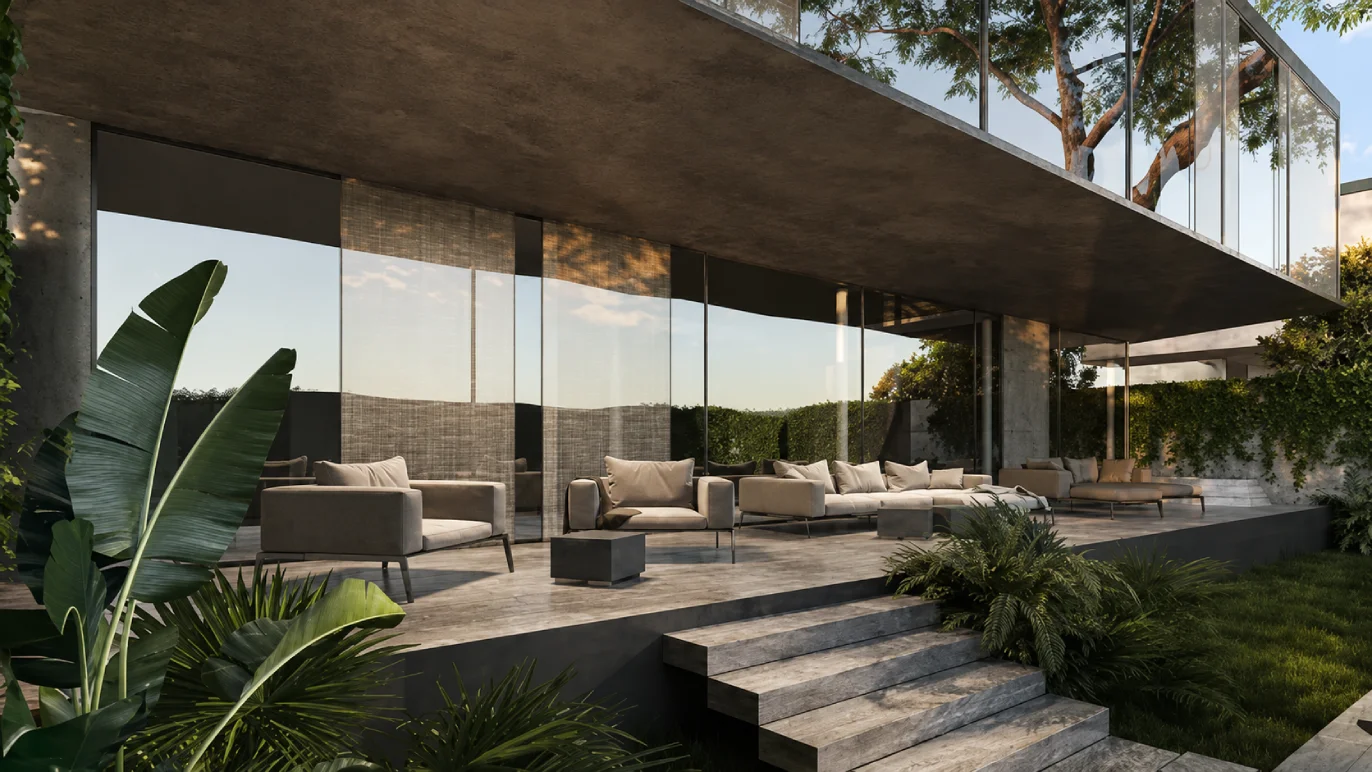
But a successful restaurant cannot depend entirely on several summer months. This makes flexibility particularly important for Odesa. An interior can be designed to connect naturally with terraces and outdoor areas during the warm season while remaining comfortable and atmospheric during the colder months. Sliding partitions, adaptable furniture, layered lighting, winter gardens and carefully planned transitions between indoor and outdoor spaces can extend the life of a concept throughout the year. For an investor, this is more than an aesthetic decision.
The ability to operate successfully in different seasons can directly influence the long-term value of the restaurant.
Across the Ukrainian HoReCa market, more focused concepts, compact formats and multifunctional spaces are becoming increasingly relevant.
In Odesa, this tendency can be especially interesting. A restaurant located in a historic building or a relatively compact urban property may not have the scale of a large contemporary venue. But thoughtful planning can make the space more productive.
- A café can become a wine bar in the evening.
- A restaurant can host private dinners or events.
- A courtyard can function as an additional dining room in summer.
- A bar can become a social focal point rather than simply a service counter.
This is where interior design becomes part of the business strategy. The goal is not to fill every square metre with furniture. It is to make each part of the space useful, comfortable and capable of changing with the needs of the business.
One of the city's greatest advantages is something that cannot easily be replicated elsewhere: its architectural character. Historic façades, courtyards, high ceilings, balconies, textured walls and distinctive proportions create a strong foundation for hospitality interiors.
Instead of covering these qualities with fashionable finishes, contemporary restaurant design can work with them. A modern intervention inside a historic Odesa building can be minimal and precise. Original architectural details can remain visible while new lighting, furniture, materials and technical systems create a completely contemporary atmosphere.
This approach is particularly relevant to the growing demand for authentic experiences. A restaurant does not necessarily need an elaborate theme when the building itself already has a story.
There is a fine line between local identity and decorative nostalgia. An Odesa restaurant does not have to rely on stereotypical maritime references, vintage postcards or obvious historical motifs to feel connected to the city.
The connection can be much quieter. Natural stone, timber, ceramics, brass, textured plaster, local artwork, soft Mediterranean-inspired colours and carefully selected details can create a sense of place without turning the interior into a theatrical reconstruction of old Odesa.
The same principle applies to the relationship with the Black Sea. Instead of literally decorating a restaurant with a “sea theme”, designers can interpret the city's coastal character through light, materiality, openness and a relaxed spatial rhythm.
This creates something more contemporary — an interior that feels Odesa rather than simply representing Odesa.
Odesa's coastal climate also has a direct architectural impact. Strong seasonal differences, summer heat, humidity, sunlight and the importance of outdoor dining all require thoughtful decisions about shading, ventilation, materials and thermal comfort. Large glazed openings can connect the restaurant with the street or courtyard, but they also require careful solar control.
Outdoor furniture needs to withstand seasonal conditions. Interior materials need to remain durable. Lighting should work equally well during bright summer evenings and darker winter afternoons. These technical decisions may not be visible to the guest, but they influence the quality of the experience.
In hospitality design, comfort is often something people notice only when it is missing.
AI and smart technologies are expected to play a growing role in restaurants — from inventory and supply management to kitchen optimisation and operational analytics.
For Odesa restaurants, this could become particularly useful as businesses look for ways to operate more efficiently through seasonal fluctuations. Yet technology should remain mostly invisible to the guest.
The restaurant of the future does not necessarily need to look futuristic. Smart lighting, energy management, kitchen equipment and digital operational systems can work quietly in the background while the public space remains warm and human. For luxury hospitality, this balance is especially important. Technology should make the experience smoother, not colder.
The wider Ukrainian context also affects restaurant architecture. Energy reliability, backup systems and the ability to maintain essential operations have become increasingly relevant to hospitality businesses.
This can influence kitchen equipment, lighting, ventilation, heating and cooling strategies from the very beginning of a project. Interestingly, some solutions can also strengthen the identity of a restaurant. Open-fire cooking, visible ovens and open kitchens have become increasingly attractive both as culinary concepts and as spatial experiences.
In an Odesa restaurant, a visible kitchen or fire element can create a natural social centre — something warm, tactile and memorable. It is a good example of how a practical consideration can become an architectural advantage.
Odesa has always been a city where atmosphere matters. People do not visit a restaurant only to eat. They meet friends, celebrate, work, observe the city, spend evenings together and return to places that become part of their personal routines.
This makes the emotional side of interior design particularly important. Lighting, acoustics, seating comfort, views, materials and spatial proportions all contribute to whether a restaurant feels inviting.
A successful Odesa restaurant should ideally create different emotional experiences throughout the day: bright and open in the morning, comfortable during lunch and more intimate in the evening. The design should follow this rhythm naturally.
Sustainability is also moving towards a more pragmatic interpretation. For restaurants, this can mean durable materials, efficient lighting, reduced waste, repairable furniture and layouts that can adapt without requiring a complete reconstruction. Zero-waste practices and more responsible resource management are also becoming part of the future HoReCa agenda.
For Odesa, where historic properties and distinctive existing buildings are an important part of the urban environment, adaptive reuse can be particularly valuable. Sometimes the most sustainable restaurant is not a new building. It is a well-designed transformation of an existing one.
Despite the uncertainty surrounding the Ukrainian market, Odesa retains a strong hospitality identity and a natural connection to tourism, leisure and the Black Sea. This makes restaurant projects potentially interesting for investors who understand the local conditions rather than simply importing an international concept.
The strongest opportunities are likely to be found in concepts that combine local identity with contemporary standards: efficient operations, flexible layouts, thoughtful technology and a memorable interior. For an investor, the value is therefore not only in the location. It is in the quality and adaptability of the concept itself.
The future Odesa restaurant does not need to be bigger or more extravagant.
- It needs to be smarter.
- It should understand seasonality, use its space efficiently, respect the architecture of the city and create an experience that guests remember.
- Its interior should be beautiful, but beauty should support the business rather than exist separately from it.
- Its technology should improve operations without taking over the atmosphere.
- And its identity should be connected to Odesa without becoming predictable.
The restaurant market is changing, but one thing remains remarkably consistent: people still want places where they can meet, eat, talk and feel good. That is perhaps the greatest opportunity for Odesa hospitality.
At AISA Interior Atelier, we approach restaurant interiors as complete environments where architecture, business logic, local context and guest experience work together. For an Odesa restaurant, this means looking beyond the visual concept and considering the building, climate, seasonality, operational model and atmosphere as one system. Because the strongest restaurant interiors are not simply beautiful spaces. They are spaces that continue to work when the market changes.
Have a project in mind?
Schedule an introductory consultation to discuss your vision, timeline, and project requirements.