Start Your Project
Have a project in mind?
Schedule an introductory consultation to discuss your vision, timeline, and project requirements.
Explore hotel investment and development opportunities in Odesa, from boutique hotels and coastal resorts to aparthotels, adaptive reuse and hospitality design.
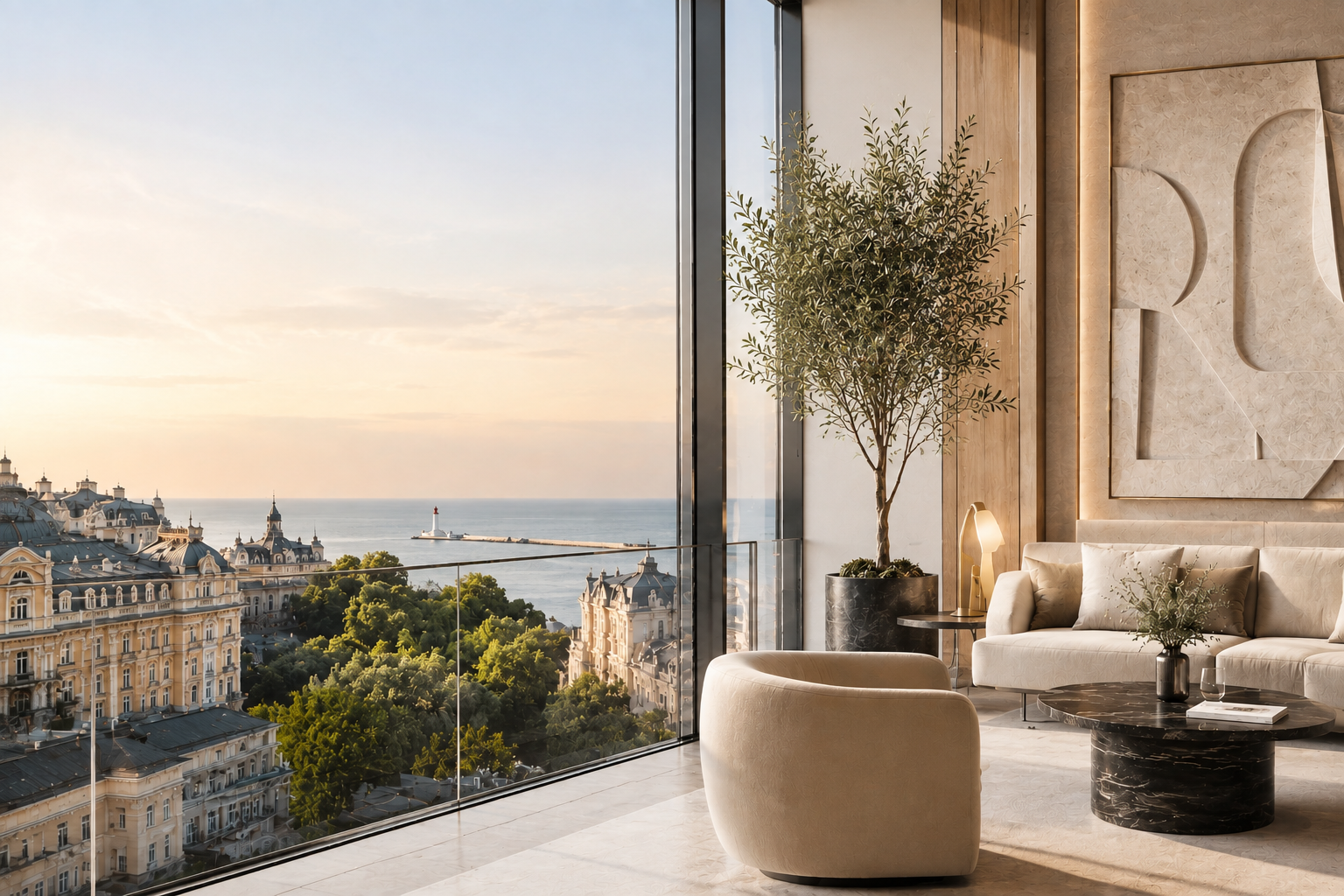
For decades, Odesa has understood hospitality almost instinctively. Its relationship with the Black Sea, historic architecture, restaurants, courtyards and summer culture has always made the city feel different from a conventional urban destination.
Today, however, developing a hotel in Odesa requires a different kind of thinking. For investors and developers, the question is no longer simply how many rooms a property can accommodate or how attractive the facade might look. A successful hotel has to respond to its location, climate, operating model and changing expectations of guests — while also being able to adapt to the future of the city.
This is where architecture and interior design become more than aesthetics. They become part of the investment strategy.
Odesa has a combination of qualities that is difficult to reproduce elsewhere in Ukraine: the Black Sea, a recognizable architectural identity, a historic urban centre, a developed restaurant culture and several distinct hospitality zones.
For developers, this creates opportunities for different hotel formats rather than one standard model. A compact boutique hotel in the historic centre might depend on heritage, atmosphere and walkability. A coastal property can be built around wellness, terraces and leisure. An aparthotel may appeal to guests looking for longer stays and a greater degree of independence.
The important point is that the location should determine the hospitality concept. Trying to place the same hotel model in every part of Odesa can mean overlooking the very characteristic that makes each location valuable.
The historic centre of Odesa offers a particularly strong foundation for boutique and luxury hospitality. Here, architecture itself can become part of the guest experience. Historic facades, courtyards, balconies, generous ceiling heights and the proportions of old buildings create an atmosphere that would be expensive — and often impossible — to recreate from scratch.
For developers, adaptive reuse can therefore be more than a preservation strategy. It can become a commercial advantage. But successful adaptive reuse requires restraint. The goal is not to turn a historic building into a themed hotel. The more sophisticated approach is to preserve the authentic elements and introduce contemporary interventions that feel natural to the building.
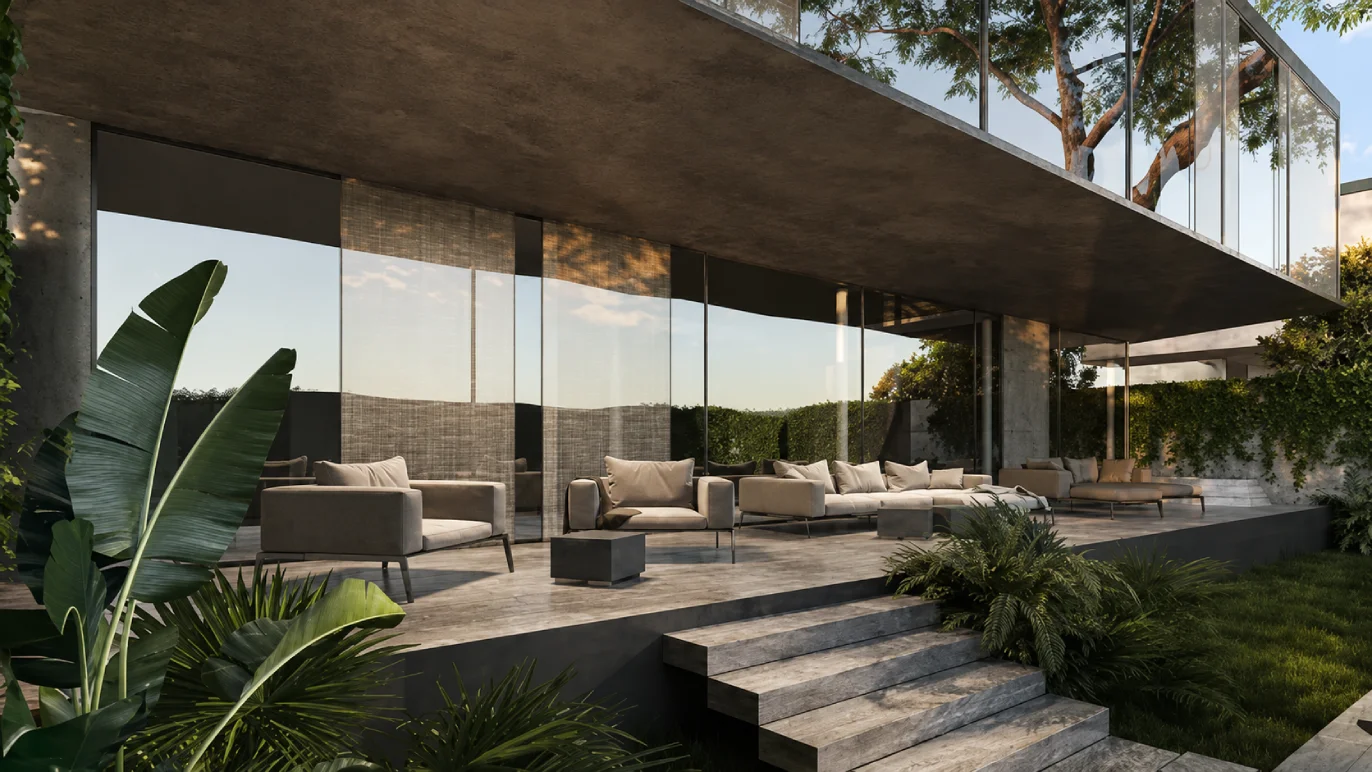
Its proximity to the sea and established leisure infrastructure makes it suitable for larger hospitality concepts, including resort hotels, aparthotels, serviced residences and mixed-use developments. Here, outdoor areas can become as important as the interiors themselves. Pools, landscaped terraces, rooftop restaurants, wellness facilities and shaded lounges extend the guest experience and create additional reasons to stay on the property.
This also allows developers to think beyond traditional room revenue. A well-planned hospitality project can bring together accommodation, F&B, wellness, retail and residential components.
There is an interesting question facing contemporary hotel architecture in the city: how local should a new hotel look? In our view, the answer does not have to involve literal references to historical Odesa. A building can belong to its city through proportion, material, light and atmosphere rather than ornament.
Stone, timber, textured plaster, metal and carefully controlled glazing can create a relationship with the coastal environment. Deep shadows, balconies, planted terraces and transitional spaces can respond to the Mediterranean-like character of the city without copying another destination.
The same principle applies to interiors. A contemporary Odesa hotel does not need nautical decoration or obvious historical motifs to feel local. Sometimes a restrained palette, natural materials and the way daylight moves through a space communicate much more.
The Black Sea climate is another factor that should be considered from the earliest stages of development. Odesa experiences strong summer sunlight, coastal humidity, salt exposure and seasonal changes. These conditions affect facade systems, outdoor areas and interior materials alike.
In a hotel, where finishes are exposed to intensive use, material selection becomes an operational decision as much as a visual one. Stone, timber, metal, textiles, bathroom surfaces and outdoor furniture should be chosen with maintenance and longevity in mind. At the same time, climate can become an architectural advantage.
Shaded terraces, planted courtyards, deep balconies, controlled solar exposure and comfortable outdoor circulation can make the property more pleasant while strengthening its identity.
One of the biggest changes in hospitality design is the disappearance of rigid boundaries between functions. The lobby is no longer necessarily just a reception area. It can be a lounge, meeting place, bar, workspace and social hub.
A restaurant can attract local residents rather than relying entirely on hotel guests. A wellness area can operate independently. A rooftop can become a destination in its own right.
For an investor, this flexibility matters. A well-designed hotel can generate value from the way its spaces are used throughout the day — not simply from the number of rooms it contains. This is why interior design should be considered alongside the business model from the beginning.
The most valuable hotel interior is not necessarily the most expensive one. It is the one where aesthetics, guest experience and operational efficiency work together.
Hotel development is a long-term investment, and the property will inevitably outlive the trends that influenced its initial design.
This makes adaptability particularly important. Room layouts should be considered with different guest profiles in mind. Public spaces should be capable of serving more than one purpose. Materials should age well rather than depend on short-lived visual trends. Infrastructure should allow future upgrades without requiring a complete reconstruction.
For Odesa, this approach is especially relevant. The city will continue to change. Tourism patterns will evolve. The balance between international visitors, domestic tourism, business travel and longer stays may shift. A hotel designed only for today's conditions can quickly become outdated. A hotel designed with several possible futures in mind has a much stronger chance of remaining relevant.
Before developing the architectural image of a hotel, it is worth answering several fundamental questions:
These questions may appear less glamorous than choosing furniture or lighting. In practice, they often determine whether the final design works as a business.
Odesa has a rare combination of architectural heritage, coastal identity and hospitality culture. Its future hotel market therefore has the potential to become much more diverse than a simple collection of conventional hotels.
For developers and investors, the opportunity lies in creating properties that are specific to their location, intelligent in their planning and distinctive in their experience. Architecture gives the hotel its presence. Interior design creates its atmosphere. Operational thinking makes it work. Together, they can transform a property into a stronger and more resilient investment.
At AISA Interior Atelier, we approach hospitality projects from this wider perspective — combining architectural context, interior design, guest experience and the long-term objectives of the development.
Whether you are considering a boutique hotel in the Historic Centre, a coastal property in Arcadia or a larger mixed-use hospitality development, we can help shape the concept from the first idea through to the complete interior environment.
Tell us about your location and project. Let's create a hotel in Odesa that is designed not only to open successfully, but to remain valuable for years to come.
Have a project in mind?
Schedule an introductory consultation to discuss your vision, timeline, and project requirements.