Start Your Project
Have a project in mind?
Schedule an introductory consultation to discuss your vision, timeline, and project requirements.
A closer look at iSaloni 2026 and the ideas shaping the next generation of interiors — from tactile materials and sculptural furniture to smarter kitchens, collectible design, craftsmanship, colour and the growing importance of experience in luxury spaces.
.png)
The 2026 edition brought together several major design platforms, including EuroCucina / FTK – Technology For the Kitchen, the International Bathroom Exhibition, SaloneSatellite and the new Salone Raritas.
Together, they offered a surprisingly complete picture of contemporary interiors — from kitchens and bathrooms to furniture, lighting, technology, collectible design and hospitality.
And although every brand had its own language, several common ideas appeared again and again.
.png)
EuroCucina was one of the key areas of the 2026 exhibition. Smart kitchens are nothing new, but their direction is changing. Instead of making technology visually obvious, manufacturers are increasingly trying to make it disappear into the architecture.
The exhibition featured increasingly intelligent appliances, including ovens that can adapt cooking programmes to different foods and preferences, refrigerators with food-management functions, and dishwashers capable of automatic dosing and self-diagnostics.
But perhaps the most interesting development was not the technology itself. It was the way technology is being integrated.
Appliances disappear behind architectural façades. Storage becomes more seamless. Lighting, ventilation and controls are incorporated into the overall composition.
The kitchen is no longer necessarily a technical room. It is becoming part of the living architecture. For luxury residential design, this is an important shift. The most sophisticated kitchen of the future may be the one where you barely notice how sophisticated it actually is.
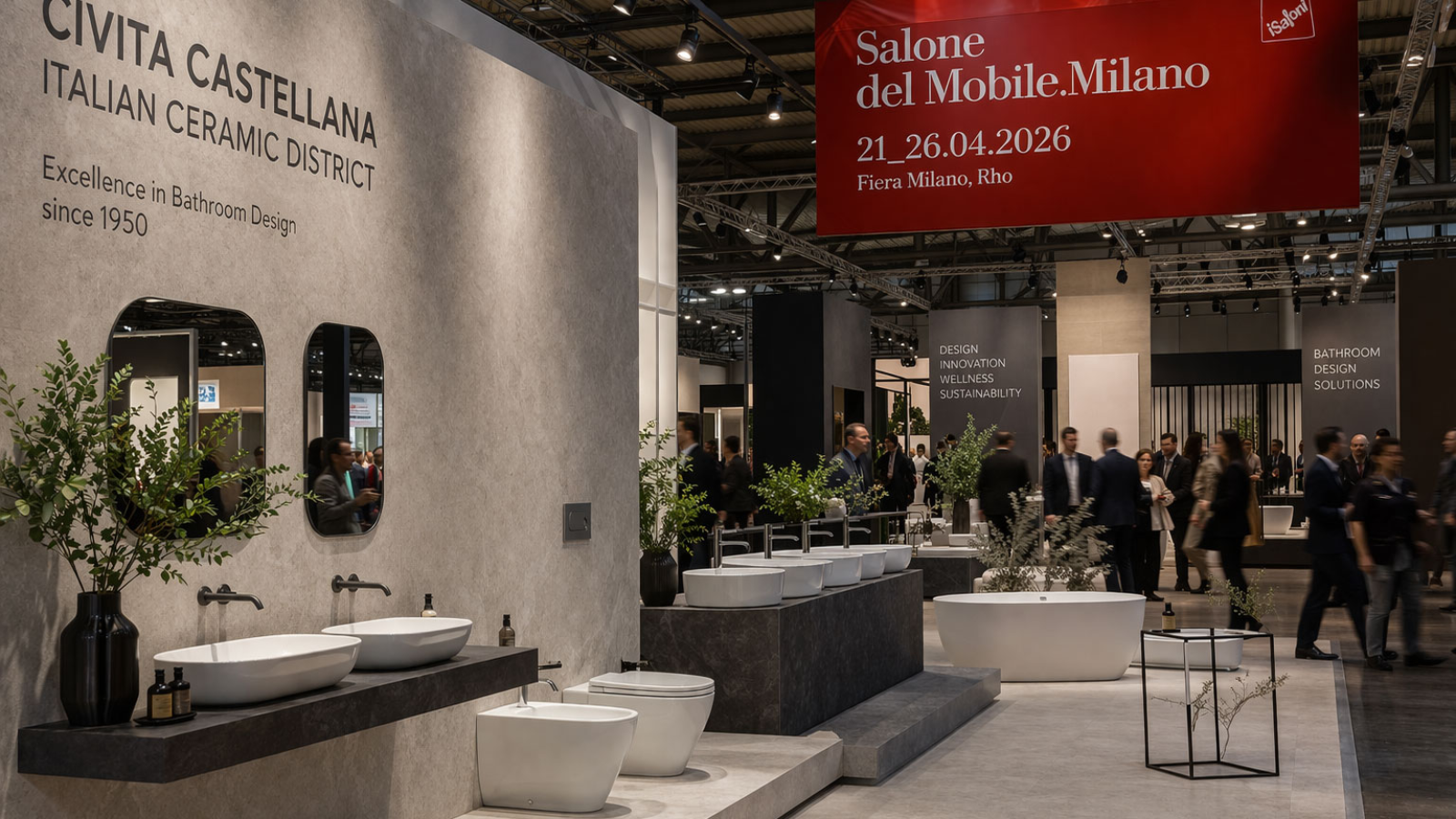
The same movement towards experience could be seen at the International Bathroom Exhibition.
The bathroom is increasingly being designed as a personal retreat rather than a purely functional space. Walk-in showers, integrated storage, atmospheric lighting, large-format surfaces and carefully considered material combinations all contribute to a more spa-like environment.
But there is something more subtle happening here. Luxury is becoming connected with time and privacy. A beautiful bathroom is no longer simply about expensive stone or impressive fixtures. It is about creating a place where the pace of everyday life slows down.
Warm lighting in the evening. Natural textures. Quiet surfaces. A comfortable temperature. A sense of enclosure. These details may never appear in a product catalogue, but they are often what make a space genuinely memorable.
Beyond individual products, iSaloni 2026 revealed several broader directions that are likely to influence residential and hospitality interiors over the coming years.
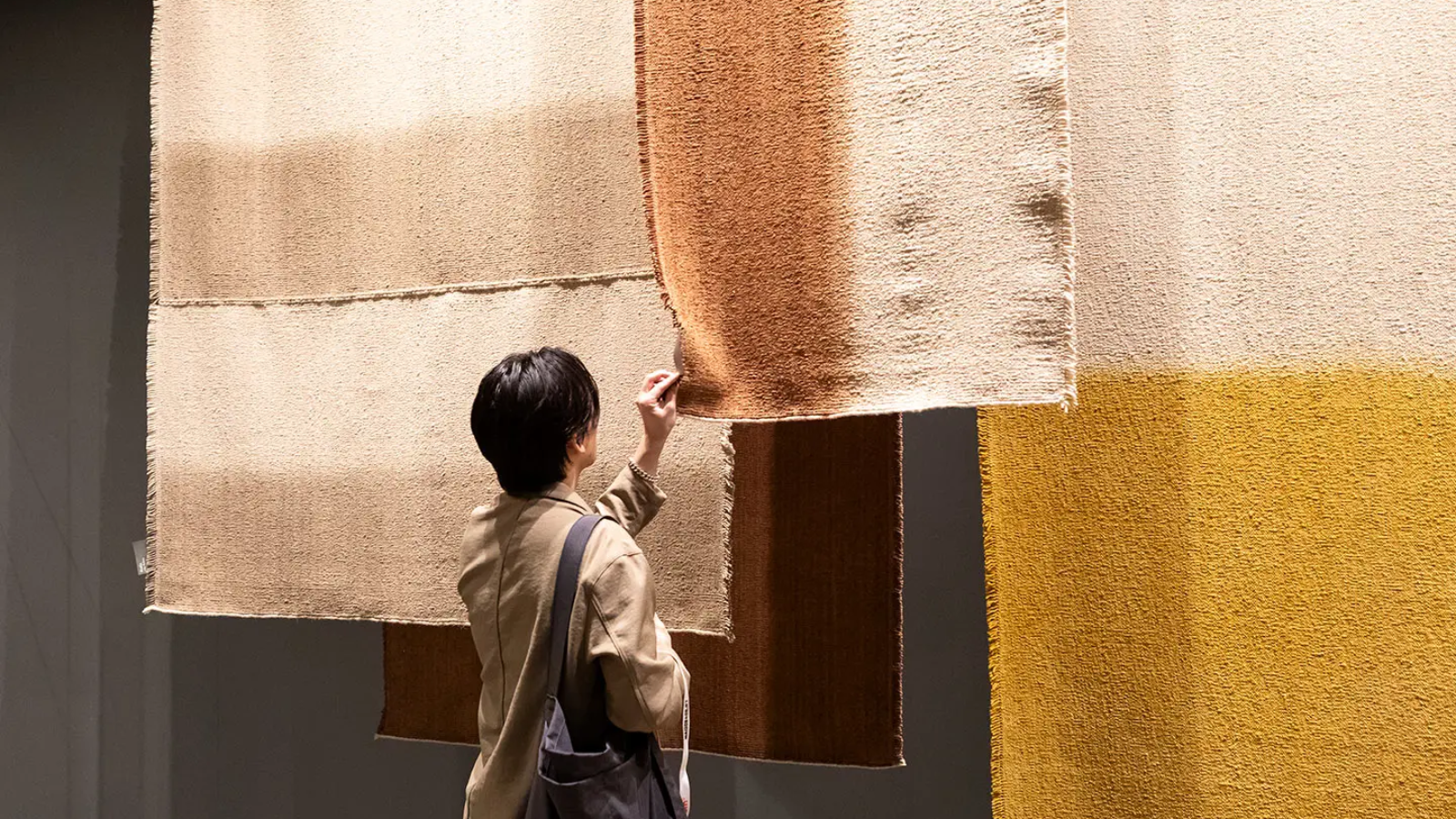
Perhaps the clearest shift was towards tactility. Stone, timber, glass, metal, woven materials and textiles were used not simply for their appearance, but for the way they feel and interact with light.
This is a natural evolution of minimalism. The minimalist interior is not disappearing. It is becoming warmer. Instead of perfectly smooth surfaces everywhere, we see subtle irregularities, natural stone patterns, brushed finishes, woven textures and handmade details.
The result is an interior that feels less like a showroom and more like a place to live. There is also something psychologically important about this trend.
As our everyday lives become increasingly digital, physical materials become more valuable. We spend more time looking at screens, so the spaces around us need to offer something screens cannot: texture, weight, warmth and physical presence.
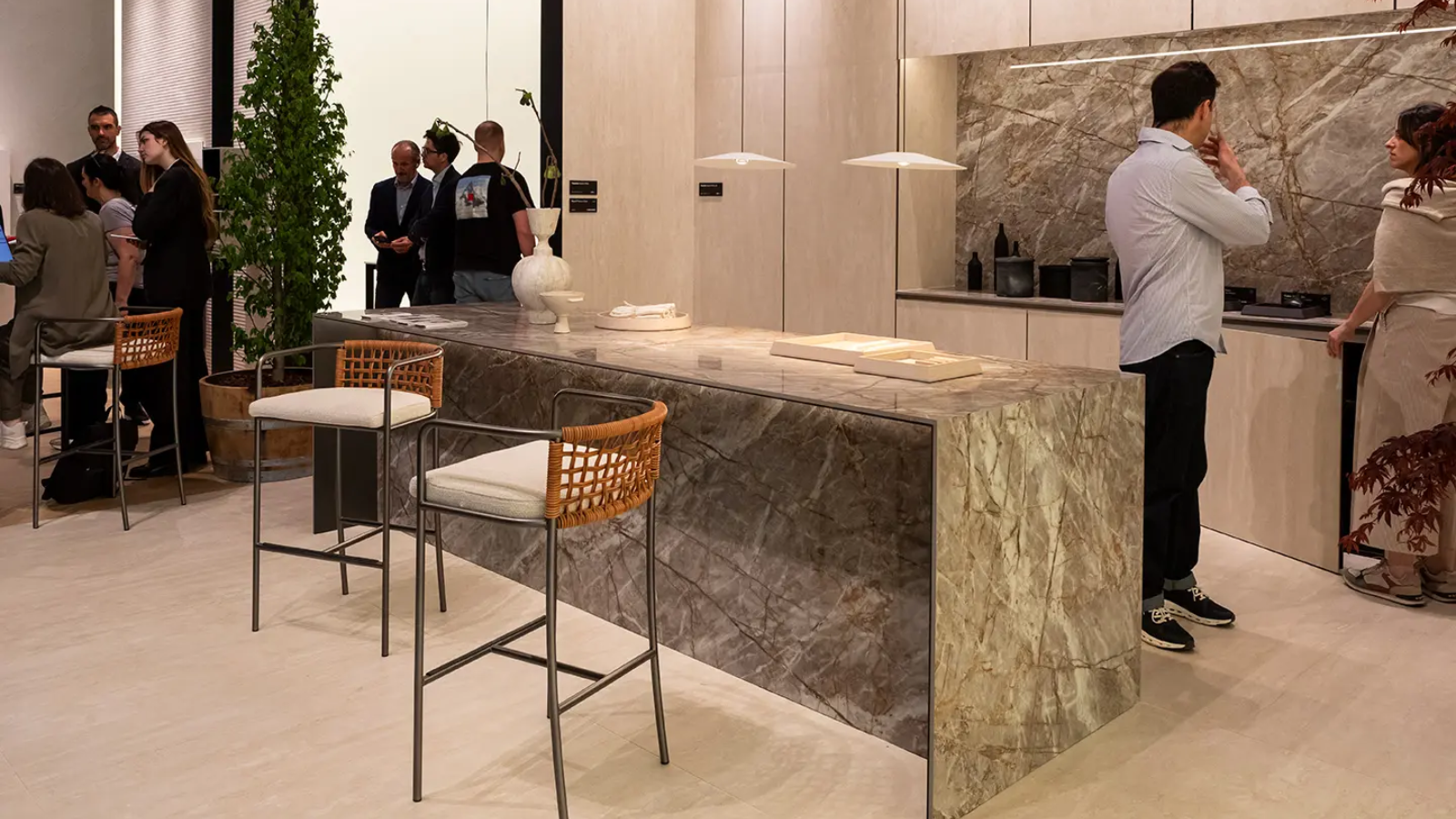
At iSaloni 2026, stone was not simply a finishing material. It became part of the furniture and, in some cases, almost part of the architecture itself.
Large stone tables, sculptural consoles, kitchen islands, wall elements and carefully carved surfaces demonstrated how natural materials can become focal points without requiring additional decoration.
This is particularly relevant to contemporary luxury interiors. Instead of covering a space with multiple decorative elements, one carefully selected stone can provide enough visual character on its own. The beauty comes from the material itself — its veining, imperfections, density and relationship with light.
The material becomes the decoration.

Metal remains important, but the industrial aesthetic is becoming softer. Rather than raw, cold and highly technical interiors, designers are combining metal with warm timber, stone, upholstery and softer forms.
Matte finishes and rounded profiles make metal feel more residential and sophisticated. This version of industrial design is particularly versatile. It can work in a contemporary city apartment, a private villa, a boutique hotel or a sophisticated restaurant without making the space feel overly commercial.
The key is balance. Metal provides structure. Wood introduces warmth. Stone adds permanence. Textiles soften the composition.
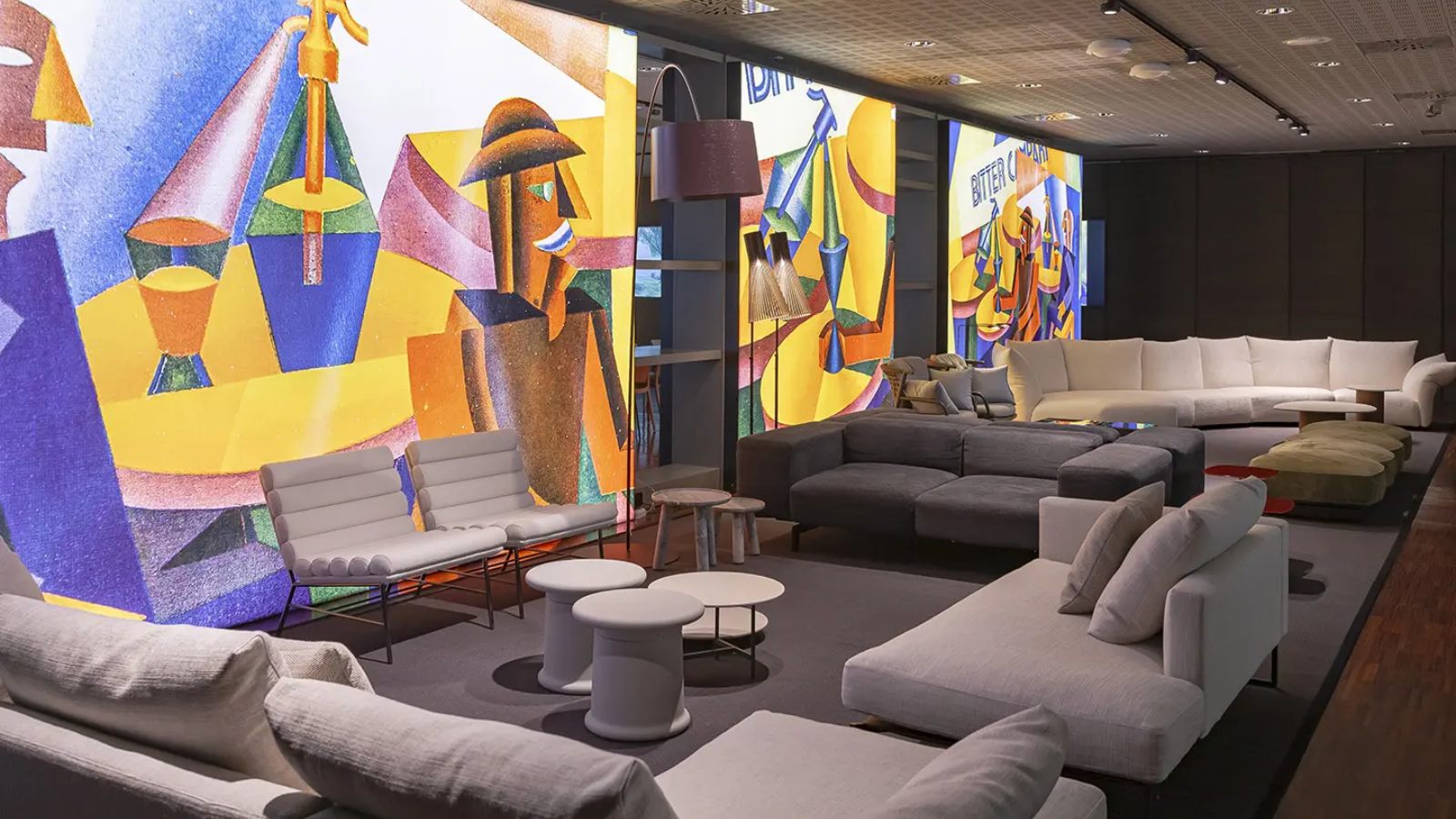
Curved furniture has been popular for several years, but in 2026 the language feels more mature. Curves are no longer simply used to make a sofa look softer.
They appear in tables, lighting, cabinetry, islands, seating systems and architectural elements. The purpose is often spatial rather than decorative. Curved forms can improve circulation, soften large volumes and create a more natural relationship between furniture and architecture.
This is especially useful in open-plan interiors, where furniture increasingly needs to define zones without creating visual barriers.
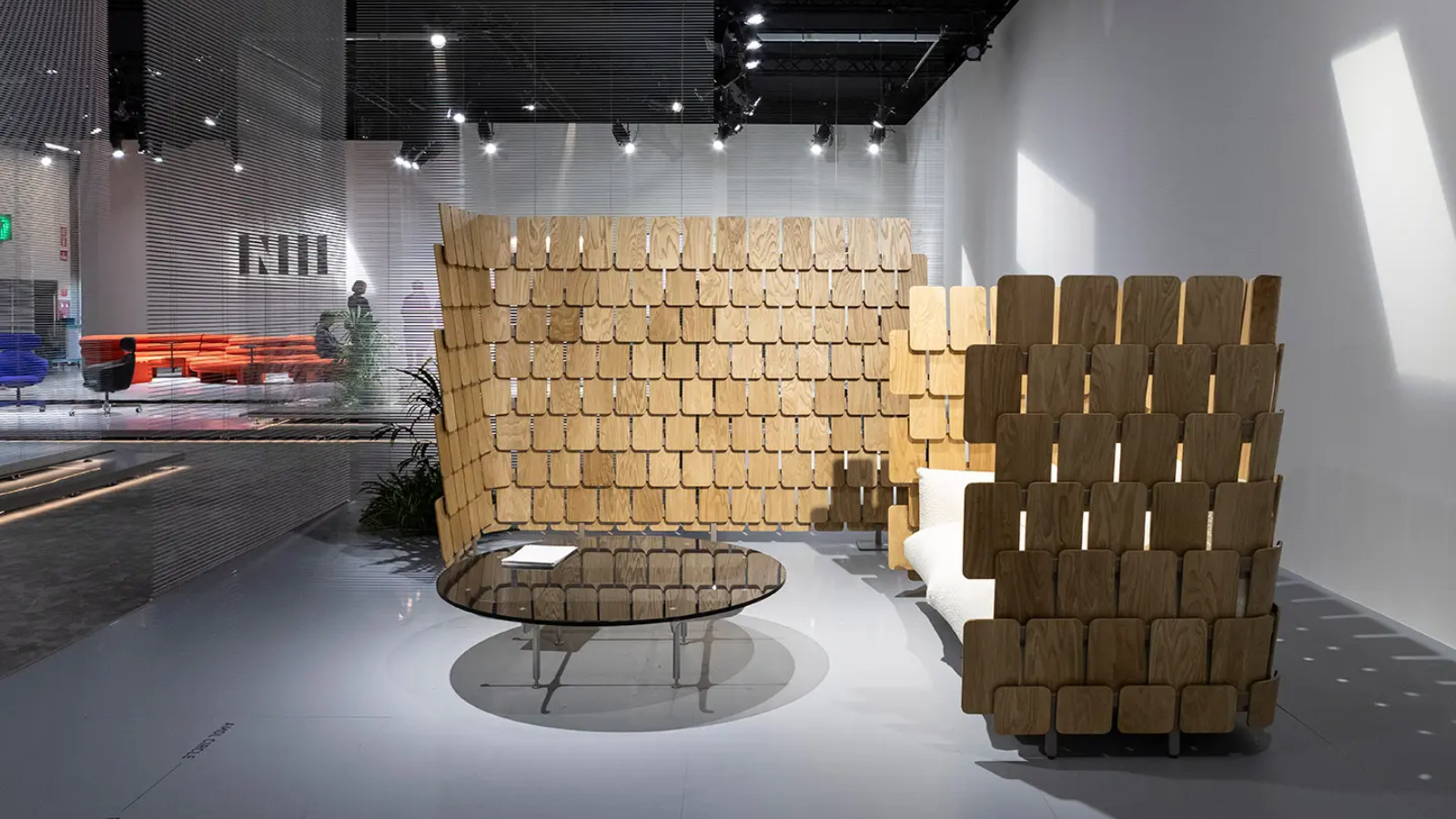
Wood is hardly a new trend, yet its role is changing. Rather than being used as an occasional decorative accent, timber is increasingly becoming a central element of the interior atmosphere. Warm woods, expressive veneers and natural finishes bring a sense of calm and familiarity.
The combination of wood and stone was particularly compelling because the two materials offer opposite qualities. Stone feels solid and permanent. Wood feels warm and alive. Together, they create one of the most enduring combinations in contemporary interior design.
.png)
After years of beige, greige and monochromatic interiors, colour is gradually returning. But it is not necessarily coming back as maximalism.
At Milan Design Week 2026, colour was often used with restraint — as a single chair, a lamp, a textile, an artwork or one carefully chosen architectural element.
One particularly noticeable accent was canary yellow, which appeared in collections including Fendi Casa and Cassina. The lesson is not that every interior should suddenly become yellow. It is that neutral interiors no longer have to remain neutral in spirit.
A quiet architectural palette can become much more expressive through one unexpected colour. This creates a useful design formula: calm architecture + one memorable gesture.
One of the most interesting conversations at iSaloni 2026 was the relationship between traditional craftsmanship and technological innovation.
The theme of the 27th edition of SaloneSatellite was “Craftsmanship + Innovation”. More than 700 designers under 35, together with 23 international schools and universities, explored how traditional techniques can coexist with new technologies and production methods.
- This feels particularly relevant to the future of luxury interiors.
- Technology allows objects to be produced with remarkable precision.
- Craftsmanship gives them character.
- The most interesting direction may therefore be neither purely handmade nor purely industrial.
It is the combination of both.
This is also why bespoke furniture, artisan finishes, handwoven textiles, limited editions and custom lighting are becoming increasingly valuable in high-end interiors. People are not necessarily looking for more objects. They are looking for objects with meaning.
Traditional materials are also being given new architectural roles. Weaving, for example, is moving beyond its familiar association with outdoor furniture. It is increasingly being used as part of furniture structures, screens and interior elements.
Glass is also becoming more expressive. Instead of being valued only for transparency, it is being explored through colour, texture, relief and light.
Natural materials such as wicker, bamboo and rattan are finding their way into contemporary interiors as well, particularly where designers want to create a connection with climate and landscape.
For Mediterranean, coastal and tropical projects, this is especially interesting. Contemporary design does not have to erase local character.
Quite the opposite. The most successful interiors often combine international design thinking with materials and techniques that belong to the place.
The introduction of Salone Raritas was one of the most interesting developments of the 2026 edition. The platform focused on curated icons, unique pieces, outsider design and collectible objects, bringing a more cultural dimension to the fair.
This reflects a broader change in luxury interiors. A sophisticated home does not necessarily need to look as though everything came from the same showroom.
Increasingly, designers are combining contemporary furniture with vintage pieces, art, limited editions and objects created by independent makers.
The result is much more personal. It begins to feel less like a designed interior and more like someone's collection built over time.
For us, this is one of the most compelling directions in contemporary residential design. Because individuality cannot be purchased as a complete furniture collection. It has to be curated.
Another project worth mentioning is Aurea, an Architectural Fiction, created by Paris-based studio Maison Numéro 20 under the direction of Oscar Lucien Ono. Presented as an imaginary hotel, Aurea explored luxury through atmosphere, proportion, materiality and experience rather than simple visual extravagance.
This idea reflects a much wider transformation in hospitality design. Hotels are no longer designed simply as collections of beautiful rooms. They are designed as experiences and narratives. A guest moves through a sequence of spaces. Light changes. Materials change. Views open and close. Furniture creates pauses. Architecture controls the rhythm. Interestingly, the same principle is now entering private residential design.
A home can also have a narrative. The entrance can create anticipation. The living room can become the social heart. A private lounge can feel more intimate. The bedroom can become quieter and more protected. Good design is increasingly about the sequence between these moments.
If there is one message that runs through iSaloni 2026, it is that luxury is becoming quieter.
It is less about showing how expensive something is and more about allowing people to experience quality,
- A beautiful stone.
- A perfectly made piece of joinery.
- A hand-finished surface.
- A comfortable chair.
- The right light at the right moment.
A piece of furniture that will still look relevant ten years from now. These things rarely need to announce themselves. And perhaps that is why contemporary luxury feels increasingly sophisticated.
The most important trends from Milan are not necessarily individual colours, furniture shapes or materials. They represent a broader change in how interiors are being conceived,
- Technology is becoming invisible.
- Craftsmanship is becoming valuable again.
- Natural materials are becoming more expressive.
- Colour is returning with restraint.
- Collectible pieces are replacing showroom perfection.
- Bathrooms and kitchens are becoming experiential spaces.
And above all, interiors are becoming more personal. For an international design studio, this distinction matters. A trend should never simply be copied from Milan and placed into another city.
The same idea needs to be interpreted differently in a London townhouse, a New York penthouse, a Dubai residence, a Mediterranean villa or a coastal home. Climate, architecture, culture and lifestyle all change the answer. That is where the real work of interior design begins.
iSaloni 2026 did not present one new style that everyone should follow. Instead, it offered something much more interesting: a direction.
A movement towards interiors that are tactile rather than sterile, personal rather than predictable, technologically intelligent but visually calm, and luxurious without being excessive. Perhaps the future of design will not be about making interiors more spectacular. Perhaps it will be about making them more meaningful.
At AISA Interior Atelier, we follow the international design scene not to reproduce trends, but to understand how they can be translated into individual architectural environments.
Whether you are planning a private residence, luxury apartment, villa, hotel or hospitality project, our approach combines contemporary international design thinking with the architecture, climate, culture and lifestyle of each location.
Have a project in mind?
Schedule an introductory consultation to discuss your vision, timeline, and project requirements.